
Cheltenham Festival Prize Money 2026: Record Purses and What They Signal for Betting Markets
 Available in US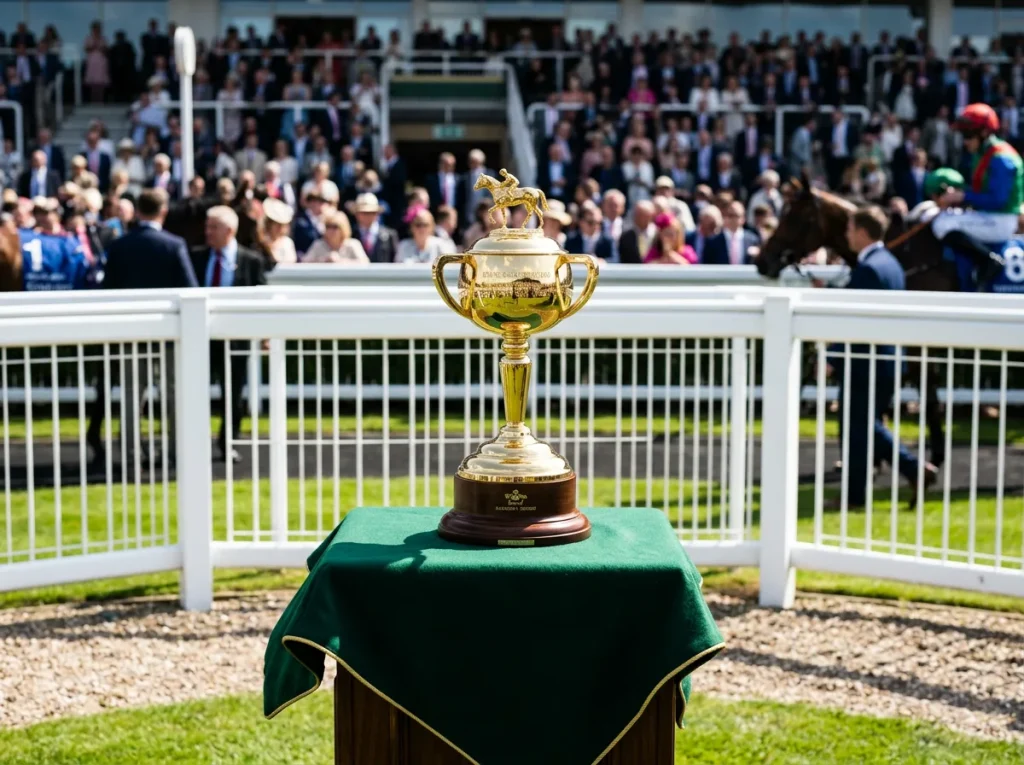
A Record £4.975 Million in Prizes – And the Chain Reaction It Creates
When the Jockey Club confirmed the 2026 Festival prize fund at £4.975 million – a 5% increase on the previous year and a new record – the figure made headlines in racing circles. It should have made headlines in betting circles too. Prize money is not a racing curiosity that sits separate from the offers you see online. It is the first domino in a chain that determines field quality, market competitiveness and ultimately the value of every promotion bookmakers attach to the Festival.
The chain works like this: higher prizes attract better horses. Better horses from more yards create deeper, more competitive fields. Competitive fields produce open betting markets where prices are spread rather than clustered around a dominant favourite. Open markets generate higher betting turnover, because more runners at attractive prices mean more people want to bet. Higher turnover produces more gross gaming yield for operators, which funds bigger promotional budgets. And bigger promotional budgets produce the offers that bring you to the Festival in the first place.
The Horserace Betting Levy Board, which allocated an additional £4.4 million for prize money in 2026 alongside £1.2 million for regulatory and integrity services, is the body that underwrites much of this cycle. Its levy yield hit £108.9 million in the most recent period – the highest since the 2017 reforms – and that income feeds directly into the prize funds that make Cheltenham commercially viable for connections and commercially attractive for bookmakers.
See also: Cheltenham Schedule 2026 with additional insights and tips.
How the Prize Fund Breaks Down Across the Four Days
The £4.975 million is not distributed evenly. The championship races – Gold Cup, Champion Hurdle, Queen Mother Champion Chase, Stayers’ Hurdle – command the largest individual purses. These are the races that define the Festival’s reputation and attract international runners from Ireland and beyond. The Gold Cup alone typically offers a first prize that dwarfs most other UK jump races throughout the entire season.
The graded novice races – Supreme, Ballymore, Albert Bartlett, Marsh – sit in the next tier. Their prize money is substantial enough to attract the best unexposed talent in the sport, which makes their markets some of the most interesting at the Festival from a betting perspective. Novices are harder to price because they have less public form, which means the markets are wider and the opportunities for value are greater.
The handicaps – County Hurdle, Coral Cup, Grand Annual, Martin Pipe and others – receive the smallest individual purses but collectively account for a significant share of the total fund. Alan Delmonte of the Levy Board observed that the Board continues to express caution about the sustainability of levy income trends, despite four consecutive years of increases. That caution is partly why the handicap purses have grown more slowly than the championship purses – the Board is concentrating its additional investment in the races that generate the most public and commercial interest.
For bettors, the prize money distribution tells you where the strongest fields will be and therefore where the most competitive – and most promotionally active – markets will form. The championship races draw the deepest promotional coverage because they carry the prestige. The handicaps draw the widest fields because the entry requirements are broader. Both create different kinds of value, and understanding which type suits your betting style helps you choose where to focus your offers.
Why Bigger Prizes Mean Stronger Fields – And Different Odds
The mechanism connecting prize money to field strength is not abstract – it is a daily calculation made by trainers and owners in the months before the Festival. A trainer deciding where to aim a talented novice hurdler has multiple options: Cheltenham, Aintree, Punchestown, or a lower-profile fixture with an easier path to prize money. The higher Cheltenham’s purses climb, the more that calculation tilts toward the Festival, because the financial reward justifies the additional risk and preparation.
When stronger horses enter stronger races, the market responds. A race that might have had a clear 2/1 favourite with a thin supporting cast becomes a race with a 3/1 favourite and three or four credible rivals at 5/1 to 8/1. This compression of the top end of the market is exactly what makes Cheltenham’s championship races so interesting – and so lucrative for promotions. A bookmaker offering enhanced odds on a 5/1 second favourite is giving away less margin than on a 2/1 favourite, because the true probability of the 5/1 shot winning is lower. The firm can afford to be generous on the price because the promotional cost is smaller.
The handicaps show the effect differently. Higher prize money in a handicap attracts more entries, which leads to bigger fields, which leads to wider odds ranges. A 22-runner handicap at Cheltenham produces prices from 3/1 to 50/1, and the sheer volume of runners creates opportunities for bookmakers to run extra-place offers, each-way specials and outsider-focused promotions that smaller fields cannot support. Online horse racing betting alone generated £766.7 million in GGY for the year ending March 2025, and a meaningful share of that revenue is concentrated in the kind of big-field, high-turnover races that Cheltenham’s prize money attracts.
There is a counter-trend worth noting. The average turnover per race on core fixtures dropped by 14.4% in early 2025, even as the total number of fixtures has remained roughly stable. This suggests that the overall market for racing bets is not growing – the pie is static or shrinking, and Cheltenham is capturing a disproportionate share of it. The record prize fund is partly a defensive measure: by concentrating value in the flagship event, the racing industry ensures that at least one fixture per year generates the commercial momentum needed to sustain the broader ecosystem.
For a wider perspective on how these market dynamics connect to the offers available during the Festival, the each-way offers guide examines the specific promotional mechanics that big-field, high-prize races generate.
Frequently Asked Questions
See also: cheltenham betting deals for prize money and betting insights.
