
Cheltenham Betting Deals 2026: Every Free Bet, Offer and Insider Angle Worth Knowing
 Available in US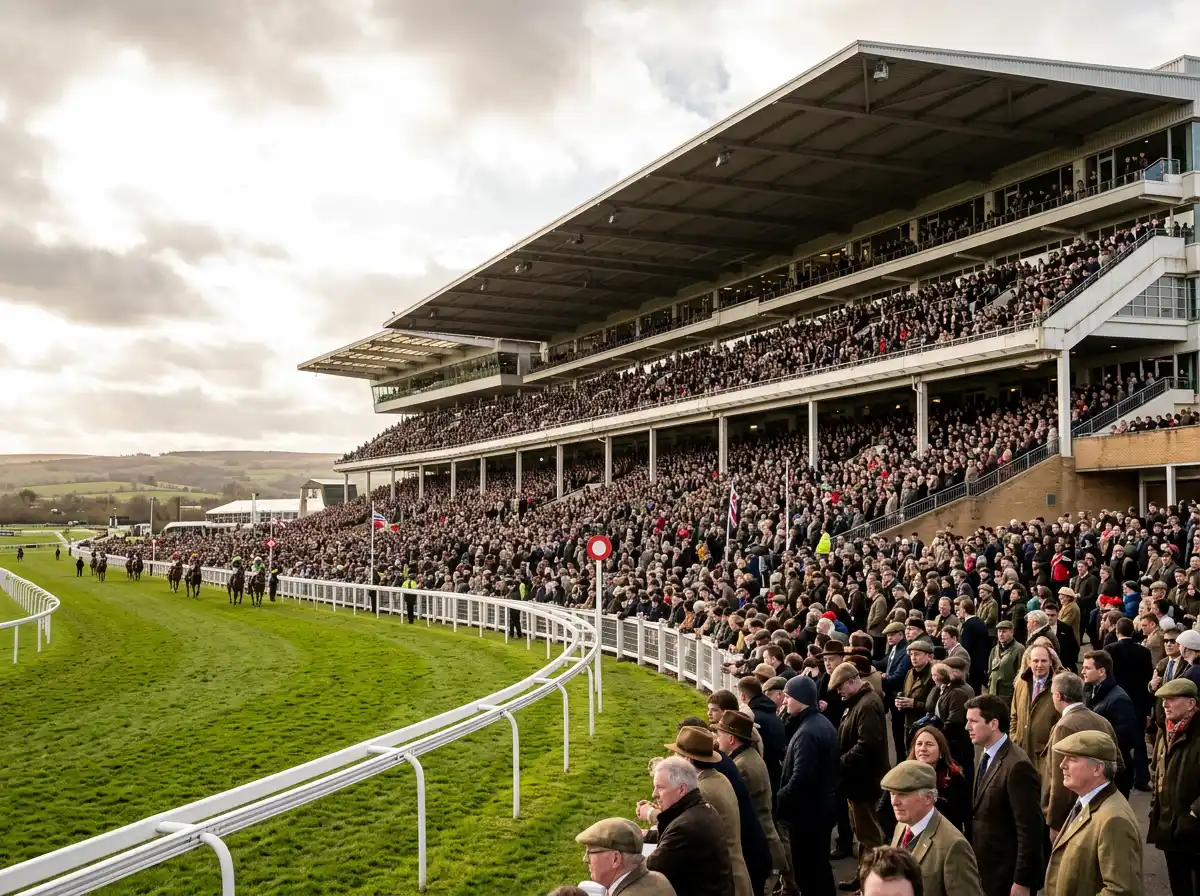
Why Cheltenham Week Moves £450 Million in Four Days
I have spent nine March fortnights glued to ante-post markets, spreadsheets of bookmaker terms and the particular chaos that descends on Prestbury Park every spring. In that time I have watched the Cheltenham Festival evolve from a four-day party with generous sign-up deals into something far more complicated — a battleground where regulatory shifts, tax hikes and a booming black market now shape the offers punters actually receive. This guide is the result of pulling all those threads together in one place, which is something no other resource in the top ten search results currently does.
William Hill expects roughly £450 million to be wagered across the four days of the 2026 Festival. Lee Phelps, the firm's spokesperson, put it plainly: "The battle between us and the punters over the four days of the Cheltenham Festival is unrivalled in Jumps racing." That figure is not a marketing flourish. Every single one of the 28 races at Cheltenham 2025 landed inside the year's top 31 by betting turnover — only the Grand National, the Derby and the Scottish National broke into that list from outside the Festival. No other fixture in British racing concentrates this much money in this short a window.
What follows is not another list of "Bet £10 Get £30" offers arranged in a table. I have built this piece as a full editorial breakdown: the types of deals available, how to evaluate whether they are actually worth taking, the regulatory landscape reshaping what bookmakers can afford to give away, the unlicensed operators trying to exploit the frenzy, and the economic engine that makes Cheltenham matter far beyond the betting ring. If you want the quick version, scroll down to the summary. If you want the analyst's view — every stat, every caveat, every angle the comparison sites leave out — keep reading.
What Nine Years of Festival Analysis Taught Me in Five Bullet Points
- The 2026 Cheltenham Festival carries a projected £450 million in betting turnover across 28 races and a record prize fund of £4,975,000 — the sheer scale justifies the volume of deals, but not all of them deserve your attention.
- Free bet tokens are worth roughly 70-80% of their headline value due to stake-not-returned mechanics. Evaluate deals by expected value, not by the number on the banner.
- Remote Gaming Duty has jumped from 21% to 40% as of April 2026, squeezing bookmaker margins and resulting in tighter promotional terms than in previous years.
- An estimated £60 million in illegal bets targets the Festival annually. Unlicensed operators offer no payout guarantees, no dispute resolution and no self-exclusion tools.
- Set your four-day budget before the first race. Affordability checks now trigger at £150 in net monthly deposits, and mid-Festival account freezes are a real possibility if you have not prepared documentation in advance.
The 2026 Festival at a Glance: Prize Money, Schedule and Viewership
Last year I stood in the Prestbury Park grandstand on Gold Cup afternoon and counted roughly 55,000 heads around me. That felt packed — until I checked the numbers later and realised it was part of a much bigger decline. Total attendance at the 2025 Festival came in at 218,839, the lowest figure in a decade and a 22% drop from the 2022 peak of 280,627. The Jockey Club has responded by trimming the daily capacity for 2026 to 66,000, setting a four-day ceiling of 264,000.
Fewer bodies on course has not dented the Festival's ambition on paper. The total prize fund for 2026 sits at a record £4,975,000 — a five percent jump from the previous year, funded partly through the Horserace Betting Levy Board, which posted a yield of £108.9 million in its latest annual report. Andre Klein, Cheltenham Racecourse's assistant general manager, frames the event's pull in broader terms: "The Festival is not only an iconic event which is loved by racing fans all over the globe, it is also hugely beneficial to Cheltenham as a town."
£4,975,000 — the record total prize fund for the 2026 Cheltenham Festival, up 5% year on year. The single biggest purse in British jump racing.
Tuesday — Champion Day
Seven races headlined by the Champion Hurdle. Historically the day with the sharpest ante-post moves.
Wednesday — Ladies Day
Seven races including the Queen Mother Champion Chase. Wednesday 2025 drew just 41,949 — the lowest Ladies Day gate since 1993.
Thursday — St Patrick's Day
Seven races featuring the Stayers' Hurdle, which swapped slots with the Ryanair Chase for 2026 — a scheduling change worth noting for ante-post punters.
Friday — Gold Cup Day
Seven races crowned by the Cheltenham Gold Cup. The 2025 Gold Cup pulled 1.8 million ITV viewers and 3.6 million streams on ITVX.
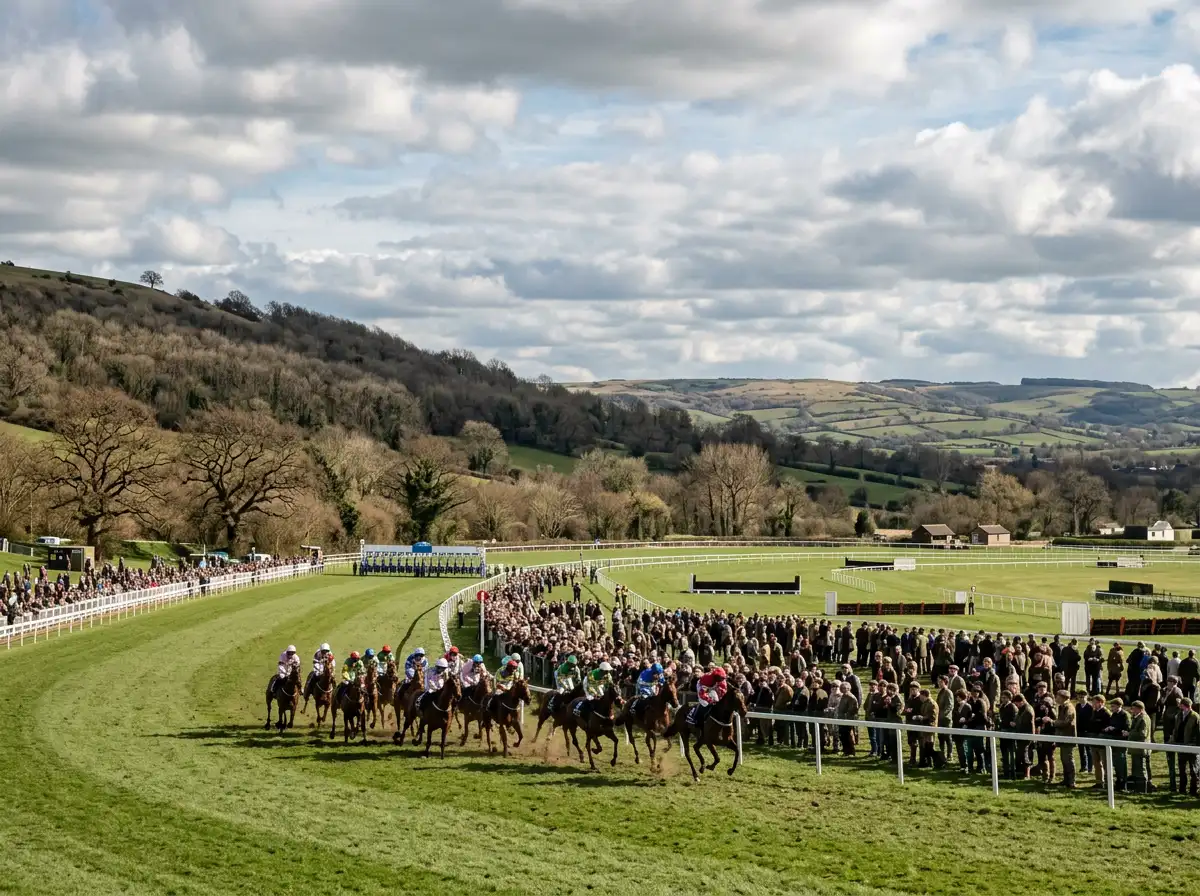
Those viewing figures matter for punters because televised races attract the heaviest promotional spend. Bookmakers time their flash offers — enhanced odds, money-back specials, extra-place terms — to coincide with ITV broadcast windows, which means the Gold Cup and the Champion Hurdle are typically where the most aggressive deals appear. Understanding the schedule is the first step toward matching the right offer to the right race, a theme I will return to throughout this guide.
The Festival's structure sets the stage. Now let's open up the machinery of the deals themselves.
See also: Cheltenham Betting Tips and Offers for more details on this topic.
Anatomy of a Cheltenham Betting Deal: Every Offer Type Explained
A first-time punter browsing offers during Festival week faces a wall of jargon: Bet and Get, enhanced odds, money back if second, cashback as bonus credit, Non-Runner No Bet, extra places. After close to a decade of dissecting these promotions, I can tell you they all fall into a surprisingly small number of categories. The marketing language changes every season; the underlying mechanics barely shift at all. What does shift is the value behind each type — and that is where the real analysis begins.
The sheer concentration of high-turnover races across four days explains why bookmakers flood the market with promotions during this window. The budget is justified by volume. But volume does not mean generosity — it means variety, and variety demands that you understand what each deal actually does.
Bet-and-Get Free Bets
Place a qualifying bet, receive free bet tokens in return. The most common Festival offer type and the one with the most hidden conditions.
Enhanced Odds and Price Boosts
Artificially improved prices on selected horses or markets, usually capped at a low maximum stake.
Money Back Specials and Cashback
Refunds triggered by specific race outcomes — your horse finishes second, falls at the last, or loses to the favourite.
Bet-and-Get Free Bets
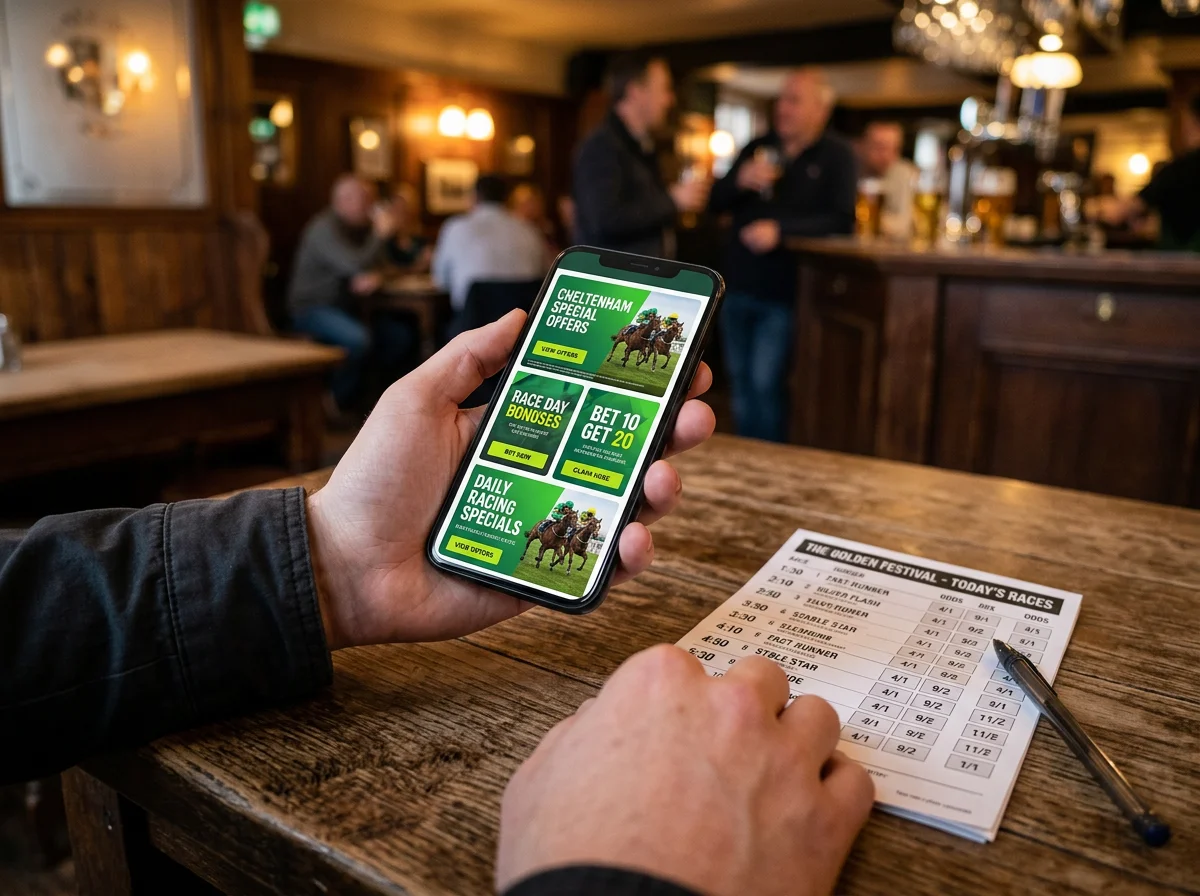
The standard structure runs like this: you open an account, deposit funds, place a qualifying bet at or above a minimum price — typically 1/2 (1.50 decimal) or higher — and the bookmaker credits your account with free bet tokens once that qualifying bet settles. The headline might read "Bet £10 Get £30 in Free Bets," and the maths sounds generous until you understand one critical detail.
Most free bet tokens operate on a stake-not-returned basis. If you place a £10 free bet at 5/1, your total return is £50 — but only £50, not £60, because the £10 token itself is consumed. That single mechanic reduces the real value of every free bet by roughly 15-20% compared to what the headline suggests. On top of that, tokens usually carry expiry windows of three to seven days and minimum odds requirements that exclude short-priced favourites.
Worked example: a £10 free bet at 11/1
If the selection wins, you collect £110 in profit. The £10 stake is not returned because it was a free bet token.
A cash bet of £10 at the same odds would return £120 (£110 profit + £10 stake).
The free bet therefore delivers 91.7% of the value of a cash bet at this price — better than at shorter odds, worse than at longer ones.
I cover the full mechanics — qualifying rules, token valuation and the differences between stake-returned and stake-not-returned formats — in my guide to Cheltenham free bets. For this overview, the key takeaway is that bet-and-get deals reward you for betting at longer odds, which happens to align neatly with the kind of competitive fields Cheltenham produces.
Qualifying bet — the first bet you must place after signing up to trigger a free bet offer. It must meet minimum stake and minimum odds conditions set out in the promotion's terms.
Enhanced Odds and Price Boosts
Enhanced odds offers take a selection — say, a 4/1 shot in the Champion Hurdle — and inflate the price to 10/1 or higher for new customers. The catch sits in two places: a maximum stake, often just £1 or £5, and the fact that winnings above the normal odds are sometimes paid as free bet tokens rather than cash. When I see a boost advertised at 30/1 on a horse that the rest of the market prices at 6/1, my first question is always whether the extra returns land as withdrawable cash. If they do not, the real uplift is far smaller than the headline implies.
Price boosts for existing customers tend to be more modest — a 5/1 horse pushed to 6/1, usually with a £50 or £100 maximum stake. These are quieter, less dramatic, and often better value pound for pound because the terms are cleaner. I have a full rundown of daily boosts and loyalty deals in my guide to Cheltenham existing customer offers.
Money Back Specials and Cashback
Money back specials refund your stake as a free bet if a specified condition occurs: your horse finishes second or third, falls at the last fence, or loses to a particular rival. These offers are popular during Cheltenham because National Hunt racing carries genuine jeopardy — roughly five percent of runners fall or unseat in jump races, which makes "money back if your horse falls" a tangible safety net rather than a theoretical one.
Cashback deals work similarly but vary in one important respect: whether the refund is credited as cash or as a free bet token. Cash refunds are simple — the money returns to your withdrawable balance. Token refunds carry the same stake-not-returned conditions as any other free bet, which means a "£10 money back" refund paid as a token is worth closer to £7-8 in real terms. Always check which format applies before opting in.
Wagering requirement — a condition requiring you to bet a certain multiple of your bonus or deposit before withdrawing. Less common in sports betting than in casino offers, but still worth checking.
Knowing what each deal type does is only half the picture. Next: how to actually claim one without tripping over the terms.
How to Claim Cheltenham Free Bets: Step by Step
Three years ago, claiming a free bet took about four minutes: enter your details, deposit, bet, done. In 2026, the process has an extra layer that catches people off guard if they are not prepared for it. The UK Gambling Commission launched pilot soft affordability checks in February 2025, triggering at £150 in net monthly deposits — a threshold that used to sit at £500. During a four-day Festival where even casual punters might deposit several times, that check can land mid-week and freeze your account until you respond.
I am not saying this to put you off. I am saying it so you budget your time. If you plan to claim offers from more than one bookmaker — and stacking across multiple accounts remains one of the most effective strategies for Festival week — start the sign-up process at least 48 hours before the first race on Tuesday. That buffer gives identity verification time to clear and avoids the panic of a pending check on Champion Hurdle afternoon.
The five-step claiming process for 2026
- Open an account with a licensed bookmaker. Have photo ID and proof of address ready — most operators now require both before you can place a bet.
- Complete identity verification. Automated checks clear in minutes for most people; manual reviews can take 24-48 hours.
- Deposit funds and opt in to the promotion. Some offers require a promo code; others activate automatically. Read the terms before depositing, not after.
- Place the qualifying bet. It must meet the minimum stake, minimum odds and market restrictions specified in the offer. Bets placed on ante-post markets sometimes do not qualify — check first.
- Wait for the qualifying bet to settle. Free bet tokens typically appear within minutes of settlement, but delays of up to 24 hours are not uncommon during peak Festival traffic.
Terms and conditions warning: The most common reason a free bet fails to arrive is a qualifying bet that does not meet the minimum odds requirement. If the terms state "minimum odds of 1/2" and you back a 2/5 favourite, the bet will settle normally but will not trigger the promotion. There is no notification, no error message — just silence where a free bet should be.
For punters who want a full visual walkthrough — including what to do when tokens do not arrive and how affordability checks interact with the claiming process — my guide to Cheltenham sign-up offers covers the registration journey from start to finish with troubleshooting advice.
Claiming is mechanical. The harder question is whether the deal you have just claimed is actually worth the effort.
How to Judge Whether a Deal Is Actually Worth Taking
Early in my career I made the mistake every new analyst makes: I ranked offers by headline value. The bookmaker offering £40 in free bets sat above the one offering £20, and I moved on. It took about one Festival cycle to realise how badly that approach fails. A £40 free bet with a 5x wagering requirement on minimum odds of evens is often worth less in practice than a £20 free bet credited as four separate £5 tokens with no wagering attached. The number on the banner is not the number that matters.
Free Bet Value Calculator
"Bet £10 Get £30" is never quite £30. Most tokens are stake-not-returned, so their real worth depends entirely on the odds you use them at. See what your token is actually worth — and why longer prices keep more of it.
Judge deals by expected value, not the banner. A stake-not-returned token keeps only (odds−1)÷odds of a cash bet's worth: about half its face on an even-money favourite, but 90%+ at 10/1 and up. That's why a bet-and-get is best spent on the competitive, longer-priced fields Cheltenham is built for — and why a £40 token with tight terms can be worth less than a clean £20 one.
Set your four-day budget before the first race. Affected by gambling? GambleAware, GamCare, or the National Gambling Helpline 0808 8020 133 (24/7, free, confidential).
The number that matters is expected value — what a free bet is actually worth when you factor in the terms, the odds you are likely to use it at, and the payout structure. I walk through each-way token maths and accumulator adjustments in my guide to Cheltenham each-way offers, where the calculation matters most. But the principle is simple: a free bet token is worth roughly 70-80% of its face value at typical Cheltenham odds, and that percentage drops the shorter the price you back.
Quick expected value illustration
Suppose you receive a £10 free bet token (stake not returned). You use it on a selection at 11/1.
If the selection wins, you collect £110. If it loses, you collect nothing — but you have not risked any of your own money.
At a true probability of roughly 8% (implied by 11/1), the expected value of this token is approximately £8.80 (£110 x 0.08). That is 88% of the £10 face value — a solid return at longer odds.
The same £10 token used on a 2/1 shot (implied probability ~33%) has an expected value of roughly £6.60 (£20 x 0.33). That is 66% of face value — still free money, but notably less.
Alan Delmonte, chief executive of the Horserace Betting Levy Board, noted after the 2025 Festival that the previous two months "produced significantly higher than usual bookmaker gross margins, with the March result shaped by particularly bookmaker-friendly outcomes at the Cheltenham Festival." In plain terms: the bookmakers had a good Cheltenham. That does not mean offers were bad — it means the outcomes favoured the house, which is what happens roughly half the time at any festival. The lesson is that evaluating a deal's worth has to be done before the race, based on the terms, not after, based on whether you won.
Do
- Compare the real expected value of tokens, not headline amounts
- Use free bets at longer odds where the stake-not-returned penalty is smallest
- Check whether "enhanced" winnings are paid as cash or tokens
- Read the expiry window — a token that expires before Gold Cup Friday is worth less if you planned to use it then
Avoid
- Ranking offers by headline number alone
- Using free bets on heavy favourites where the SNR cost is proportionally highest
- Ignoring minimum odds requirements — the most common reason tokens go to waste
- Treating money-back-as-token refunds the same as cash refunds

With nearly half a billion pounds in play across four days, the deals are genuine — but they are also calculated. Bookmakers set promotional budgets based on expected customer lifetime value, not on generosity. Your job is to extract the maximum real value from each token before it expires, and that starts with understanding the maths rather than the marketing.
Value also depends on context. The regulatory environment has changed dramatically heading into this Festival, and those changes reach directly into your betting account.
See also: cheltenham betting deals and browse all current promotions.
Tax Rises, Affordability Checks and What They Mean for Offers
On 1 April 2026 — precisely two weeks before the Festival — Remote Gaming Duty jumped from 21% to 40%. That is not a typo. The tax that online bookmakers pay on their gaming revenue has nearly doubled in a single leap. Remote betting duty for non-racing products rises from 15% to 25% in April 2027, though stakes on UK horse racing remain taxed at the lower 15% rate. The Treasury projects these reforms will raise £810 million in additional revenue in 2026/27 and £1.16 billion annually by 2030/31.
Remote Gaming Duty: 21% to 40% — effective 1 April 2026. This is the single largest tax increase on UK gambling operators in the modern regulatory era. It applies to online casino and gaming revenue, while remote betting duty on horse racing holds at 15%.
Why should a punter care about the tax rate a bookmaker pays? Because promotional budgets come directly out of post-tax margins. When an operator's effective tax bill nearly doubles on one revenue stream, the money available for sign-up offers, daily boosts and enhanced odds contracts. Entain — the group behind several major high-street and online brands — reported a loss of £681 million after tax for 2025, partly driven by an impairment charge of £488 million linked to anticipated UK tax changes. These are not abstract numbers. They translate into tighter terms, smaller token values and fewer speculative promotions than punters enjoyed three or four years ago.
Nevin Truesdale, former chief executive of the Jockey Club, pushed back against the regulatory direction: "The Gambling Commission seems to want to reduce gambling to just small-stakes gamblers and that can't be right." That frustration echoes across the industry, but it does not change the facts on the ground. The Jockey Club itself has warned that affordability checks alone could cost the racing industry £250 million over five years.
Affordability checks in practice: Since February 2025, the Gambling Commission's pilot triggers soft checks at £150 in net monthly deposits, down from the previous £500 threshold. During Cheltenham week, where deposits spike, some punters will encounter these checks mid-Festival. Verification typically requires payslips or bank statements and can pause your account for 24-72 hours. Plan deposits in advance to avoid disruption.
Grainne Hurst, CEO of the Betting and Gaming Council, framed the tension directly: "Rising taxes and increasingly intrusive checks will only make it harder for legitimate operators to compete. The priority must be keeping punters in the regulated market where protections are in place, rather than driving them towards harmful unregulated operators." Whether you agree with the industry's position or the regulator's, the practical effect is the same: expect fewer headline-grabbing deals in 2026 than in 2024, and expect the terms attached to those deals to be tighter. The impact is especially visible in ante-post betting offers, where longer exposure windows magnify the cost of any regulatory friction.
Tighter regulation on the legal side creates an opening on the illegal side. That opening has grown into a £60 million problem.
The £60 Million Black Market: Why Unlicensed Sites Are Never a Deal
During the 2025 Festival I had a conversation with a punter who told me, completely unprompted, that he had placed an ante-post bet on a horse through an offshore site because "they didn't ask for any ID and the odds were better." He said it like he had found a loophole. What he had found was a trap. The Betting and Gaming Council estimates that up to £60 million in illegal bets targeted the Cheltenham Festival in 2026 — roughly £2 million per race. That number is not an outlier. Across the full year, unlicensed operators process an estimated £2.7 billion in online bets from UK customers, and a Racing Post survey found that one in three punters staking £1,000 or more had used an unregulated site in the previous twelve months.
£60 million — the estimated volume of illegal bets placed on the Cheltenham Festival 2026, according to the Betting and Gaming Council. That works out to roughly £2 million per race across the four-day card.
Grainne Hurst put it bluntly: "Cheltenham is the biggest week of the year for racing fans and millions placed bets safely with regulated operators. But the criminal harmful black market also tried to cash in, targeting punters with illegal betting that offers none of the protections provided in the regulated sector." Andrew Rhodes, chief executive of the UK Gambling Commission, echoed the concern: "The illegal market is unsafe and criminal. We need deep insights to combat it effectively." The government has allocated £26 million to the Gambling Commission specifically to fight unlicensed gambling, but enforcement moves slowly while offshore sites multiply fast.
What you lose with an unlicensed operator: No UKGC dispute resolution. No self-exclusion tools. No affordability protections. No guarantee of payout. No recourse if the site disappears overnight. The "better odds" a black-market site offers are irrelevant if you can never withdraw your winnings.
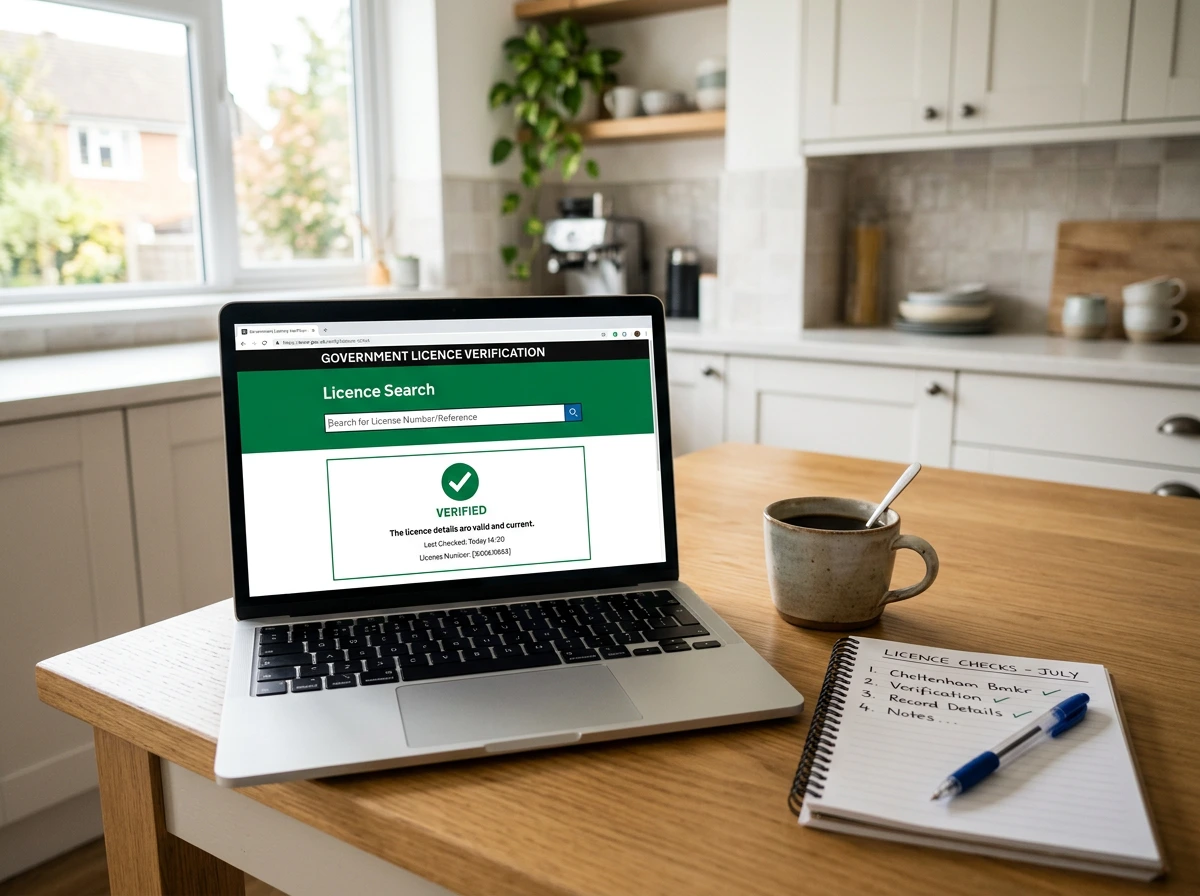
The black market is not a fringe issue. Yield Sec estimated that unlicensed operators controlled approximately 9% of the UK online market in the first half of 2025, handling around £379 million in gross gaming yield. An estimated 1.5 million people in the UK already bet with unregulated sites, placing roughly £10 billion a year outside the licensed system. The simplest protection is also the most effective: before depositing with any operator, check the UK Gambling Commission's public register to confirm the site holds an active licence. If it does not appear, walk away — no odds advantage is worth the risk of never seeing your money again.
The regulated market exists to protect you. But protection only works if you also protect yourself — and that means setting limits before the Festival, not after.
Betting Responsibly During Festival Week
I write about betting deals for a living, so let me be direct about something the comparison sites bury in a footer disclaimer. The Gambling Survey for Great Britain recorded that 2.7% of UK adults scored 8 or above on the Problem Gambling Severity Index in 2024 — the clinical threshold for problem gambling. Among 18-24 year olds, that figure rises to approximately 10%. These are not distant statistics. During a high-frequency event like Cheltenham, where seven races per day create seven opportunities to chase a loss, the risk of tipping from entertainment into harm is real and measurable.
Problem gambling prevalence: 2.7% of UK adults meet the PGSI threshold for problem gambling. Among 18-24 year olds the rate is roughly 10%. Participation in horse race betting runs at about 7% during the April-July racing season and drops to 4% outside it — Cheltenham week concentrates both interest and risk.
Horse racing betting participation peaks at around 7% of the adult population during the spring-summer season and drops to 4% the rest of the year. Cheltenham sits right at the front of that seasonal wave, which means a significant number of people placing Festival bets are doing so for the first or second time that year. Seasonal bettors are not more or less vulnerable than regulars — but they are less likely to have deposit limits, reality checks or cooling-off periods already configured on their accounts.
Every licensed bookmaker operating in the UK is required to offer deposit limits, loss limits, session time alerts and self-exclusion options. These tools exist because the regulator mandates them, and they work — but only if you activate them before the adrenaline of a winning first race or the frustration of a losing one makes the decision for you. Setting a four-day budget for Cheltenham week is not cautious. It is the same discipline I apply to my own betting analysis: know the number before you start, and do not revise it upward during the event.
If betting stops being enjoyable at any point during the Festival — or at any other time — GambleAware and the National Gambling Helpline provide free, confidential support. No article about betting deals is complete without that sentence, and I mean it without qualification.
The Festival generates intense emotion for punters. It also generates intense economic activity for an entire region — and the scale of that activity helps explain why the deals exist in the first place.
Beyond the Betting Slip: Cheltenham's £274 Million Economic Footprint
I always find it useful to zoom out at this point in the analysis. Cheltenham is a town of about 120,000 people that, for four days every March, absorbs tens of thousands of visitors who eat, drink, sleep and spend at a rate that reshapes the local economy for the entire year. A University of Gloucestershire study pegged the Festival's economic impact at £274 million in 2022, up dramatically from roughly £100 million when the same researchers measured it in 2016. Average visitor spending climbed from £584 to £697 over that period, and 67% of those surveyed described the Festival as a bucket-list event.
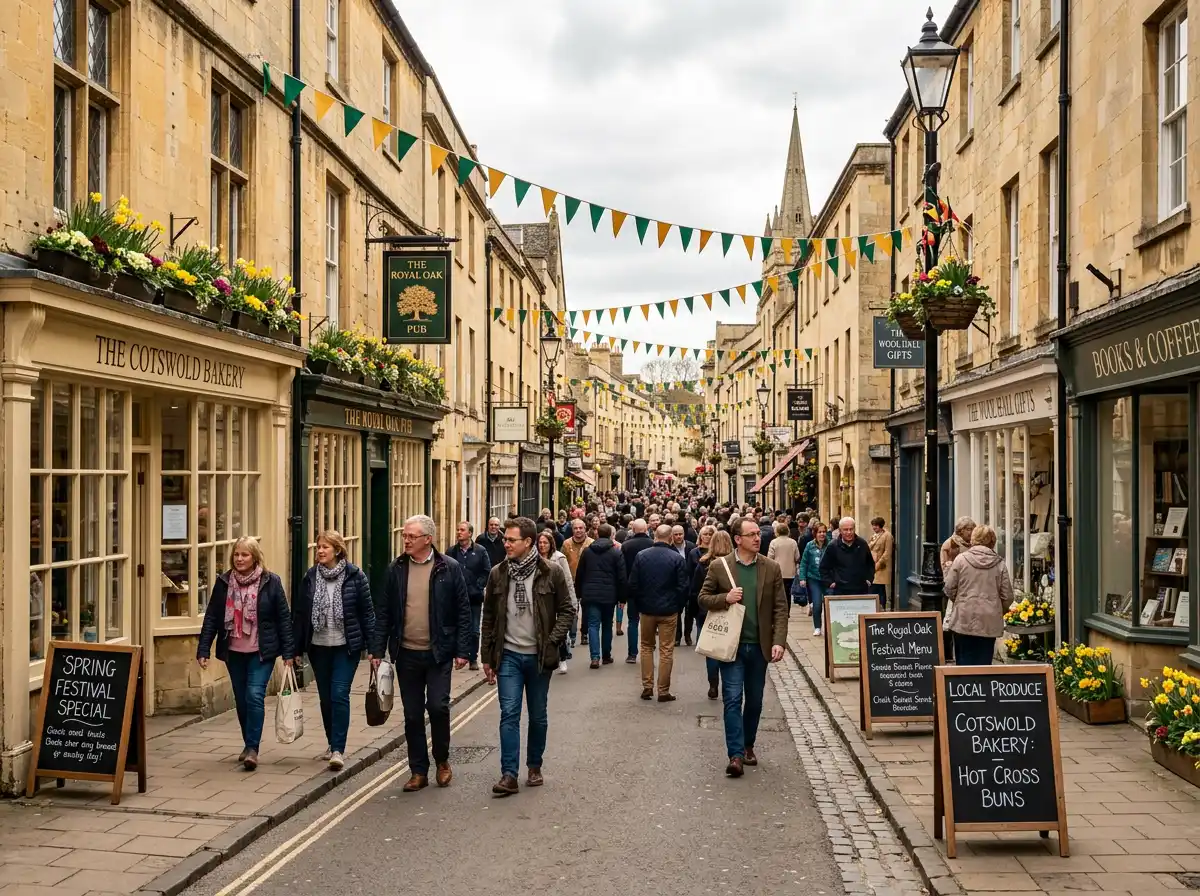
Ian Renton, who was the Jockey Club's regional managing director at the time, celebrated the 2022 peak: "We welcomed a record crowd of 280,627 over the four days of The Festival in 2022 and it is very satisfying to see that have such a tremendously beneficial effect on the wider economy in the Cheltenham locality." The attendance has since fallen from that record, but per-head spending has continued to rise — a pattern that mirrors the betting market itself, where total turnover dipped while individual bet sizes on premium fixtures held steady.
265,000 pints of Guinness — the volume consumed across the 2025 Cheltenham Festival. That is enough to fill three Olympic swimming pools, and the number grew year on year even as overall attendance declined.
The connection to betting deals is more direct than it appears. The Festival's economic gravitational pull — the hospitality revenue, the broadcast rights, the sponsorship income — feeds back into prize money, which attracts stronger fields, which drives higher betting turnover, which justifies larger promotional budgets. When the prize fund hits a record and the TV audience stays robust, bookmakers have commercial cover to fund aggressive offers. When attendance drops or turnover per race declines — as it has, with the average handle per race falling 8% year on year in the latest Levy Board report, and 19% compared to 2021/22 — the promotional equation tightens. Everything is connected, and understanding the ecosystem helps you understand why the deals you see look the way they do.
Frequently Asked Questions
How do Cheltenham free bets work?
Most Cheltenham free bets follow the bet-and-get model. You open an account, place a qualifying bet that meets minimum stake and minimum odds conditions, and the bookmaker credits your account with free bet tokens once the qualifying bet settles. The tokens operate on a stake-not-returned basis in the vast majority of cases — meaning if you place a £10 free bet at 5/1, you collect £50 in profit rather than the £60 a cash bet would return. Tokens typically expire within three to seven days and cannot be withdrawn as cash; only the winnings from a successful free bet are paid to your balance.
Can you withdraw winnings from Cheltenham free bets?
Yes. The profit from a winning free bet is credited to your withdrawable balance in most cases. The free bet token itself is consumed when placed, so the stake portion does not come back, but any winnings above the stake are treated as real cash. Some promotions pay enhanced portions of the winnings as bonus credit with wagering requirements attached, so always check whether the terms specify "cash" or "bonus" for the payout.
What is the best Cheltenham free bet offer in 2026?
The "best" offer depends on how you plan to bet. For punters who back selections at longer odds — 6/1 and above — a larger free bet token with clean terms and no wagering requirement tends to deliver the highest expected value. For those who prefer shorter-priced selections, a money-back-as-cash offer often outperforms a bet-and-get deal because it removes the stake-not-returned penalty. Rather than chasing the biggest headline number, compare the real expected value of each offer based on the odds you typically back. I have outlined the evaluation framework in the section above on judging deal value.
What does Non-Runner No Bet mean at Cheltenham?
Non-Runner No Bet — often abbreviated to NRNB — is a promotion where the bookmaker refunds your stake as cash if your selected horse does not start the race. This is most relevant for ante-post bets placed weeks or months before the Festival, where the risk of a horse being withdrawn due to injury, ground conditions or a change of plans is considerable. Without NRNB protection, an ante-post bet on a non-runner is a losing bet, settled at full loss regardless of why the horse was scratched. Several major bookmakers offer NRNB on selected Cheltenham ante-post markets, though the terms vary — some apply it to all races, others only to feature events.
What is the difference between free bets and deposit bonuses?
Free bets are specific tokens tied to individual wagers. You place the free bet, and any winnings are paid out minus the stake. Deposit bonuses add a percentage of your deposit — say, 100% up to £50 — to your account as bonus funds. Bonus funds almost always carry wagering requirements, meaning you must bet a multiple of the bonus amount before withdrawing. In sports betting, free bet tokens with no wagering requirement are generally more favourable than deposit bonuses with 3x or 5x turnover conditions, because the real cost of meeting those conditions at short odds can exceed the bonus itself.
How much is wagered on the Cheltenham Festival each year?
William Hill projects approximately £450 million in total bets across the four days of the 2026 Festival. That figure positions Cheltenham as the single most heavily wagered fixture in British jump racing. For context, remote horse racing betting generated £766.7 million in gross gaming yield across the full financial year ending March 2025 — and a substantial share of that annual total is concentrated in the Festival window alone.
Are Cheltenham betting deals available during all four days?
Yes, though the nature and volume of deals shifts day by day. Sign-up offers are available throughout the Festival and can be claimed on any day. Existing-customer promotions — price boosts, money-back specials, extra-place offers — are refreshed daily and often tied to specific races on that day's card. Gold Cup Friday and Champion Hurdle Tuesday typically attract the heaviest promotional spend from bookmakers, while Wednesday and Thursday offers tend to fly slightly more under the radar. Punters who monitor offers across all four days rather than focusing solely on the feature races often find the best value in the less publicised midweek deals.
