
Cheltenham Festival Betting for Beginners: A Plain-English Guide to Your First Wager
 Available in US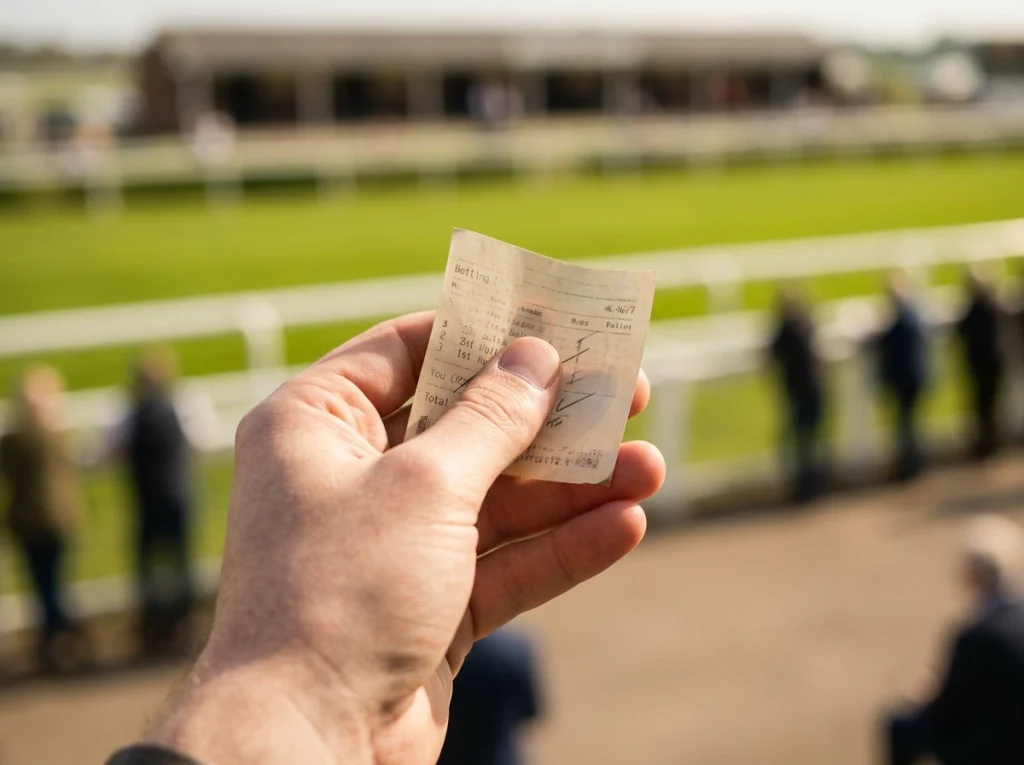
Your First Cheltenham Bet Should Not Feel Like a Maths Exam
My first bet at the Cheltenham Festival was £5 each-way on a horse whose name I liked. I had no idea what “each-way” meant, I did not check the odds, and I certainly did not understand why the nice lady at the Tote window asked me whether I wanted win or place. The horse finished seventh. I lost my fiver. But I learned more in that two-minute conversation than in any guide I had read beforehand, because the conversation was in English and the guides were in jargon.
About 7% of UK adults bet on horse racing during the season, and a meaningful chunk of those people place their first ever horse racing bet at Cheltenham. The Festival is the entry point for casual bettors who watch the Gold Cup on ITV, hear colleagues talking about tips at work, and think: I might have a go this year. If that is you, this piece is written specifically for you – and I promise to explain everything in terms that do not require a statistics degree.
Around 15% of UK adults bet on racing at least once a month, with the 25-34 age group most represented at 32%. Many of those monthly bettors started at an event like Cheltenham. The learning curve is gentler than it looks, and the Festival’s four-day structure gives you time to learn from Tuesday’s mistakes before Friday’s Gold Cup.
See also: How to Claim Free Bets for more details on this topic.
Understanding Odds: Fractional, Decimal and What They Mean for Your Wallet
Odds are the language of betting, and the Festival uses two dialects. Fractional odds – written as 5/1, 3/1, 7/2 – are the traditional British format. Decimal odds – 6.00, 4.00, 4.50 – are the European format used by most online platforms as a default option. Both tell you the same thing: how much you stand to receive for every pound you stake.
Fractional odds work exactly as the numbers suggest. At 5/1, you receive £5 in profit for every £1 staked. A £10 bet at 5/1 pays £50 profit plus your £10 stake back = £60 total. At 3/1, a £10 bet pays £30 profit plus £10 = £40. At 7/2, a £10 bet pays £35 profit plus £10 = £45. The first number is always the profit; the second number is always relative to what you stake.
Decimal odds include the stake in the number. At 6.00 (which is the same as 5/1), a £10 bet returns £60 total. At 4.00 (same as 3/1), it returns £40. To convert fractional to decimal: divide the first number by the second and add one. So 7/2 = 3.5 + 1 = 4.50. Most betting apps let you switch between formats in the settings, so use whichever feels more natural.
The number you need to care about is implied probability – what the odds tell you about the horse’s chances. At 2/1, the implied chance is 33%. At 5/1, it is about 17%. At 10/1, roughly 9%. The shorter the price (smaller the first number), the more likely the market thinks the horse is to win. The longer the price, the less likely. Favourites are horses with the shortest prices. Outsiders are at the longest. Cheltenham regularly produces results at all points of that range, which is what makes it compelling – and why backing a selection purely because it is the favourite is not the guaranteed strategy newcomers sometimes assume it to be.
Placing Your First Festival Bet: A Walkthrough
Here is the literal sequence of actions, from no account to bet placed, stripped of all fluff.
Choose a bookmaker and register. You will need your name, date of birth, address and an email. Set a deposit limit when prompted – pick a number that represents the total amount you are comfortable losing across the entire Festival. This is not the amount you expect to lose; it is the maximum you can afford to. Once registered, deposit funds using a debit card. E-wallets (Skrill, Neteller) are accepted by some firms but are excluded from many promotions, so a debit card is the safest route for a first-time user.
Navigate to the horse racing section and find the Cheltenham Festival card for the day you want to bet on. Each race is listed with the runners and their odds. Tap or click on the odds next to the horse you want to back. This adds the selection to your bet slip – a panel that shows your chosen horse, the odds, and a field where you enter your stake.
Enter your stake. For a first bet, £5 is enough to make the race interesting without creating anxiety. Choose whether you want a “win” bet (your horse must win) or an “each-way” bet (your horse must win or finish in the places – usually first, second or third). An each-way bet costs double your unit stake because it is two bets: £5 each-way costs £10 total (£5 to win, £5 to place). Confirm the bet. You now have a stake on a race at the Cheltenham Festival.
Watch the race. If your horse wins, the profit appears in your account automatically. If you bet each-way and the horse places but does not win, the place portion pays out at a fraction of the odds (typically one-quarter). If the horse finishes outside the places, you lose your stake. That is the complete experience. Everything else – free bets, accumulators, enhanced odds – builds on this foundation.
Common First-Timer Mistakes and How to Avoid Them
The most expensive beginner mistake at Cheltenham is chasing losses on the same day. You back a horse in the first race, it loses, and you double your stake on the second race to “win it back.” This is how a planned £20 afternoon becomes an £80 afternoon. The four-day Festival structure is your friend here: if Tuesday goes badly, you have Wednesday, Thursday and Friday to enjoy without escalation. There is no urgency to recover on the same day.
The second mistake is ignoring the terms of a free bet offer. If you sign up to claim a welcome bonus, read the conditions before placing the qualifying bet. Minimum stake, minimum odds, opt-in requirements – missing any one of these means your free bet tokens never arrive, and your qualifying bet was just a regular bet that lost. Five minutes of reading saves genuine frustration.
The third mistake is betting on every race. Seven races per day, four days, 28 races total – the Festival generates a relentless temptation to have a bet on everything. Resist it. Two or three bets per day is enough for a first-timer. It keeps the budget manageable, the experience enjoyable, and the attention focused. You will learn more from three considered bets than from seven impulse ones.
Problem gambling affects 2.7% of UK adults at the threshold level, and among 18-24 year olds the rate is closer to 10%. If at any point during the Festival you feel like your betting has stopped being fun, every bookmaker offers deposit limits, reality checks and self-exclusion tools in the account settings. Using them is a sign of control, not weakness. The sign-up offers guide includes detail on the tools available at the account-creation stage.
Frequently Asked Questions
See also: cheltenham betting deals and start betting with confidence.
