
Cheltenham Lucky 15 Offers 2026: Bonuses, Consolation Payouts and Which Bookmakers Pay Best
 Available in US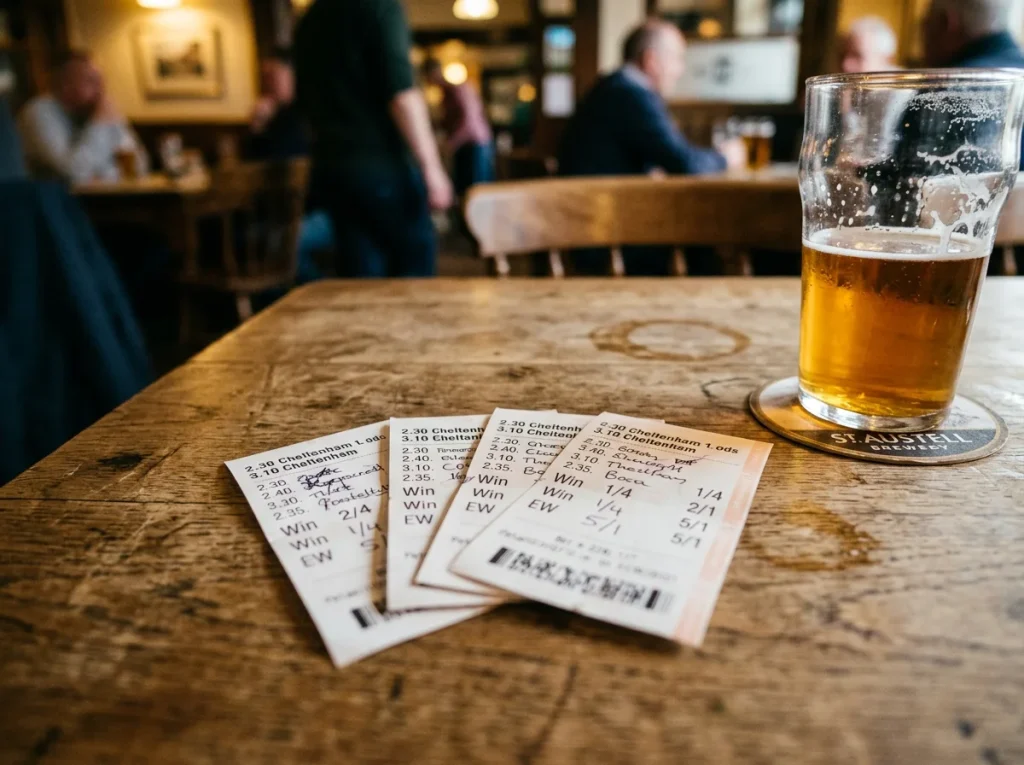
Fifteen Bets From Four Selections – And the Bonuses That Change the Maths
The first Lucky 15 I placed at Cheltenham returned nothing on the races themselves – all four horses finished out of the places – but I still received a payout. The firm I used offered a consolation of double the odds on my only winner (there was no winner, but had one landed at 10/1, I would have been paid at 20/1). That consolation feature is what separates a Lucky 15 from a basic accumulator, and at Cheltenham – where all 28 races across four days produce enough variety to fill a Lucky 15 comfortably – it transforms the bet type into something more interesting than the headline complexity suggests.
A Lucky 15 is not a single bet. It is fifteen bets across four selections: four singles, six doubles, four trebles and one four-fold. The structure means you collect a return even if only one of your four selections wins. The risk is that the total stake is fifteen times your unit – a £1 Lucky 15 costs £15, and a £2 Lucky 15 costs £30. The reward is that if all four selections win, the combined return can be enormous, and many firms apply a bonus on top.
See also: Cheltenham Accumulator Offers to deepen your understanding.
How a Lucky 15 Bet Is Structured
Understanding the anatomy of the bet matters because it affects which offers you can apply to it and how your returns are calculated.
Take four horses: Selection A at 3/1, Selection B at 5/1, Selection C at 7/1, Selection D at 10/1. Your fifteen bets are: four singles (A, B, C, D), six doubles (AB, AC, AD, BC, BD, CD), four trebles (ABC, ABD, ACD, BCD) and one four-fold (ABCD). If all four win, every one of those fifteen bets pays out. The four-fold alone returns £2,640 on a £1 unit stake. Add the trebles, doubles and singles, and the total return exceeds £4,000 from a £15 outlay.
If three of the four win, you collect on three singles, three doubles and one treble – seven of the fifteen bets pay out. If two win, four bets pay (two singles and one double). If only one wins, you collect on just that single. The cascading structure means partial success still generates a return, which is why the Lucky 15 has endured as a popular Cheltenham bet despite its higher unit cost.
The key thing to grasp is that each of the fifteen component bets is settled independently. This means bookmaker offers that apply to singles, doubles or trebles can layer on top of the Lucky 15 structure. A firm offering acca insurance on trebles, for example, applies that insurance to each of the four treble components within your Lucky 15. The interaction between multi-bet structures and promotional mechanics is where the real value lies.
Lucky 15 Bonuses and Consolation Payouts Across Bookmakers
Two types of Lucky 15 enhancement are common at Cheltenham, and they serve different purposes.
The all-four-winners bonus is a percentage uplift applied when all four selections win. The standard bonus across the industry is 10%, though some firms offer 15% or even 20% during festival week. On a Lucky 15 that returns £4,000 from a £15 stake, a 10% bonus adds £400. That is a significant premium for no additional risk, and it is the primary reason to choose a firm with a strong Lucky 15 bonus rather than placing the component bets manually.
The one-winner consolation is a payout applied when exactly one of your four selections wins and the other three lose. The standard consolation is double the odds on the winning selection’s single. If your one winner was priced at 8/1, the single normally returns £8 profit (on a £1 unit) – with the consolation, it returns £16. This does not recover the full £15 stake, but it softens the blow from a 25% strike rate. Some firms offer treble the odds instead of double, which can make the consolation meaningful enough to cover the total stake at longer prices.
During Cheltenham, William Hill projects approximately £450 million in total Festival wagers, and Lucky 15 bets contribute a recognisable share of that volume – particularly among punters who want to spread their interest across the card without placing seven separate singles. The competitive pressure between operators on Lucky 15 terms intensifies during festival week, which means the bonuses available in March often exceed what you would find at any other time of the year.
The differences between firms are not trivial. A 20% all-winners bonus versus a 10% bonus is a £400 difference on a £15 Lucky 15 that returns £4,000. A treble-odds consolation versus double-odds can turn a losing day into a breakeven one. Checking the Lucky 15 terms before the Festival starts – rather than discovering them after you have placed the bet – is worth the five minutes it takes.
Selecting Four Festival Races for a Lucky 15
The selection process for a Cheltenham Lucky 15 is different from picking a daily accumulator. You are choosing four races, not four horses – because the structure of the Lucky 15 means every combination of those selections generates a separate bet. The ideal four selections should be independent in both form terms and market terms.
What I mean by that: avoid selecting four horses that are all likely to be affected by the same conditions. If you pick four runners that all need soft ground, and the ground dries out overnight, all four selections are compromised simultaneously. Your fifteen bets become fifteen bad bets. Spreading your selections across different race types – one championship race, one novice event, two handicaps, for instance – gives you natural diversification.
Price distribution matters too. A Lucky 15 with four short-priced selections at 2/1 each produces modest returns even if all four win – roughly £300 from a £15 stake before bonuses. The same £15 with selections at 3/1, 5/1, 7/1 and 10/1 returns over £4,000 if all four land. The variance is higher, but the Lucky 15 structure already provides a cushion through its partial-success payouts. If you are going to accept the higher unit cost of fifteen bets, selecting at prices that justify the risk is the logical approach.
For further detail on how multi-bet structures interact with the broader offer landscape at the Festival, the each-way offers guide covers the mechanics that apply when Lucky 15 components are placed each-way – a combination that creates thirty bets instead of fifteen and opens up additional return pathways.
Frequently Asked Questions
See also: cheltenham betting deals for Lucky 15 betting promotions.
